
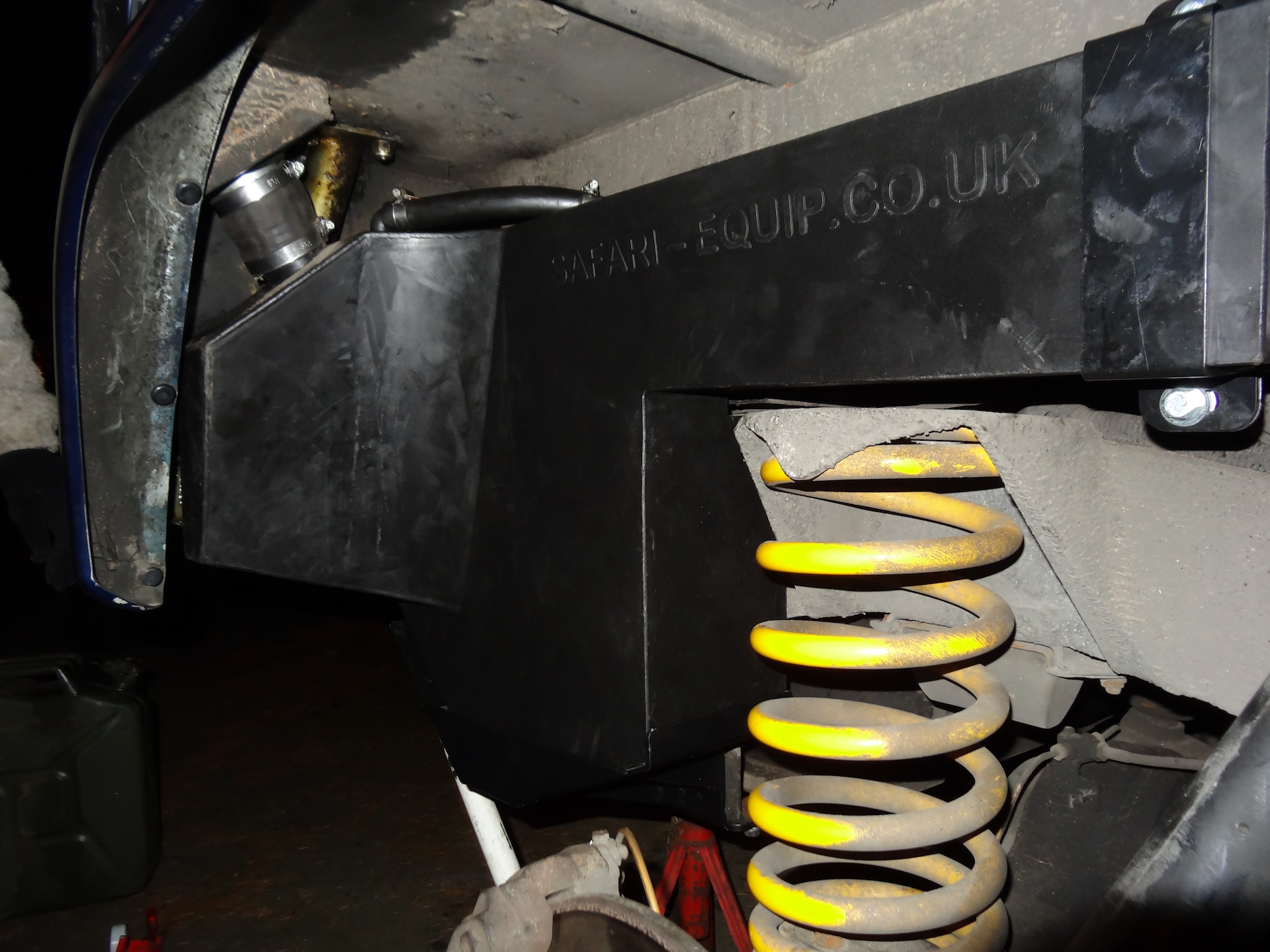
Supplementary tank for the main tank.
To make the most of the available space and to keep the weight as low as possible we’re trying to avoid using jerry cans or similar means of adding/carrying extra fuel capacity. We need a reasonable range for a few of the tracks/routes we’re aiming to follow and ideally we’re looking for around 1000 km range. Obviously that would be simpler at reasonable fuel consumption but, particularly “off road” we have to assume a worst case fuel consumption.
The standard TD5 rear tank has a capacity in the region of 65 litres and the first modification was to add a supplementary tank under the wheel arch. This tank replaces the normal filler pipe from the filler cap to the tank adding around 25 litres capacity.
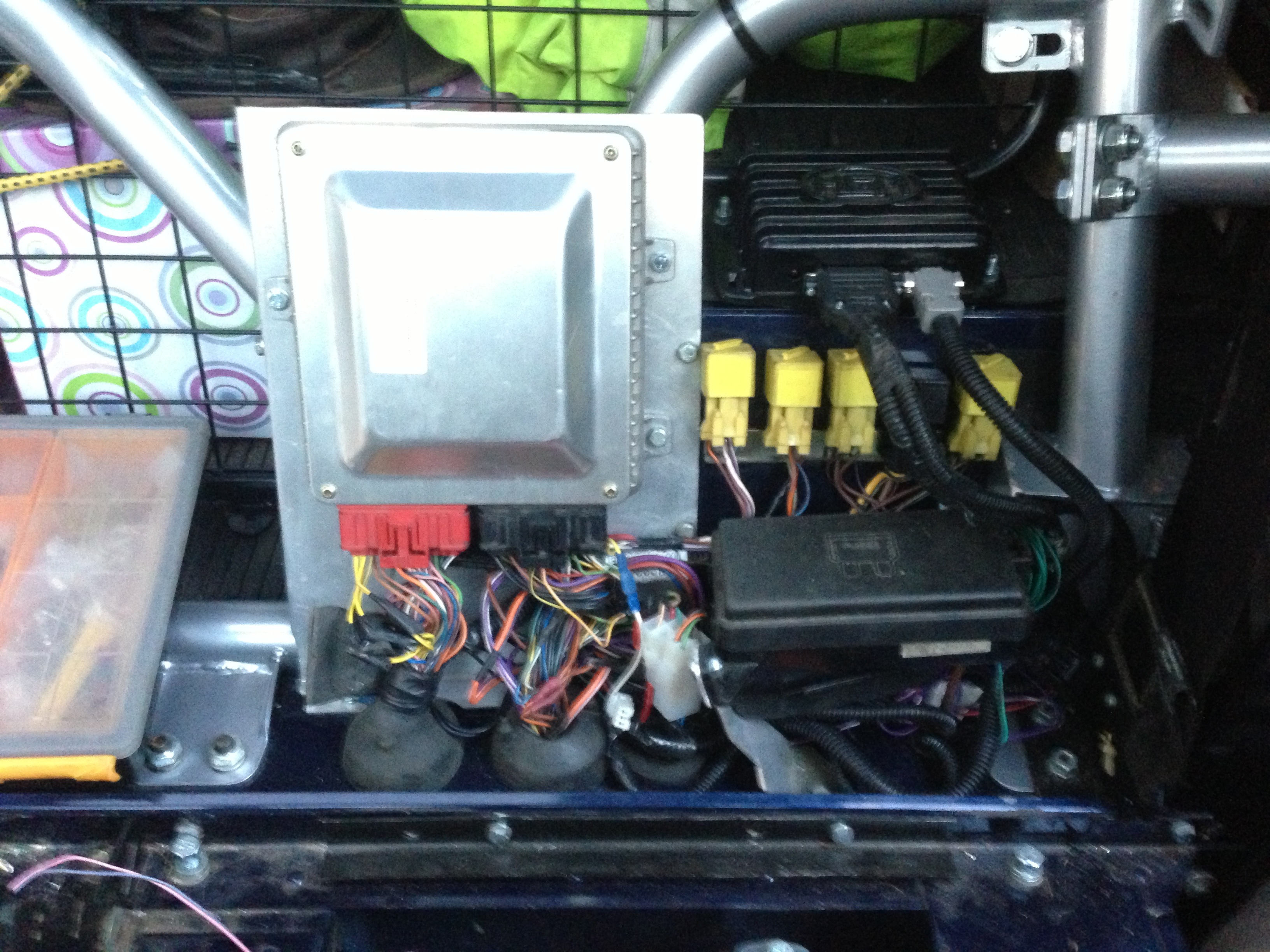
ECUs, relays and fuse box relocated.
There are a number of aftermarket additional tank designs available but most of them come at a hefty price tag and don’t really give much of an increase in capacity for the money they cost. Defender 90s and, before that, 90s and Series 1.11.111 vehicles all had under seat tanks with the TD5 being the first short wheel base to have a rear tank. So if it worked for over 50 years it makes sense to do the same, especially as the tank and it’s fittings are all available off the shelf as standard parts.
On the TD5 when Land Rover moved the tank to the rear they decided to position the engine ECU and primary fuse box under the seat instead of the tank. This meant that to fit an under seat tank the first thing I had to do was move those. As a bonus the relocated ECU increases the safe wading depth of the vehicle by around 1ft.
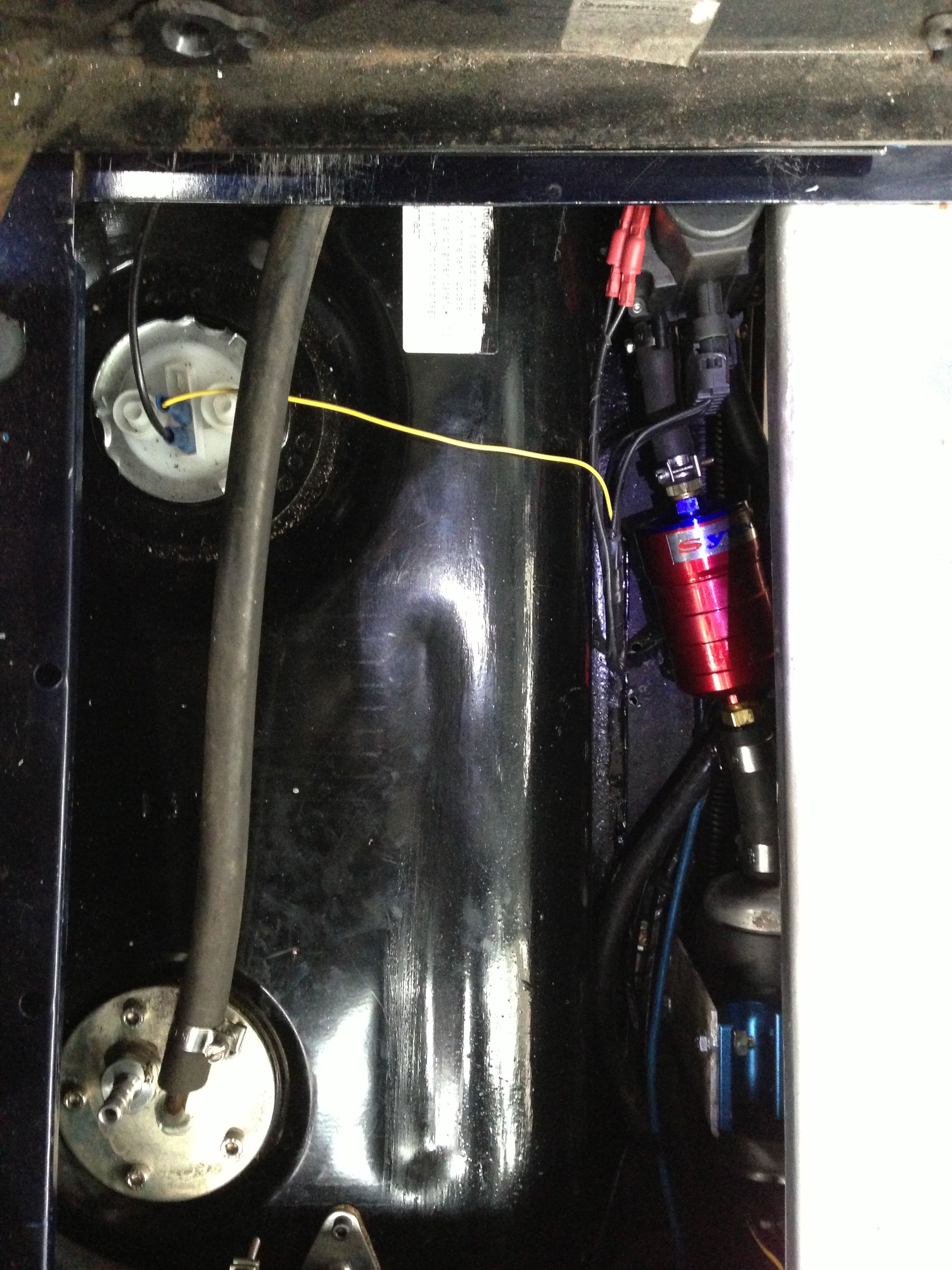
Under seat tank with valve, filter and pump mounted alongside
The two tanks (rear and front) aren’t connected together. A lot of additional tank setups use balance pipes that allow the fuel to move between tanks. This simplifies the pump and filling arrangements but a hole/leak in any tank means you potentially lose all your fuel instead of just the fuel in one tank. For our setup I sourced a changeover valve that sits between the two tanks, switching over the fuel pickup, return pipe and fuel gauge feed simultaneously. The valve is controlled by a switch on the dash that allows the tank to be changed over “on the fly”. With the engine running, changing between tanks is completely transparent, changing over from one to the other without the engine missing a beat.
Hopefully by isolating the two tanks and having the fuel pump as the only common part between them we should have some level of redundancy. We’ll carry a spare pump and regulator obviously !